Showing posts with label Bishop. Show all posts

Saturday, February 21, 2026

March 1--St. David of Wales, Abbot and Bishop


"Gwnewch y pethau bychain mewn bywyd." For those of you who don’t know Welsh, that means: “Do ye the little things in life,” the last words of today’s saint, St. David of Wales, who died around 589 A.D. Born in about 500 A.D., the grandson of a king in Wales, David became “renowned as a teacher and preacher, founding monastic settlements in Wales” and elsewhere. He attended a synod in Wales denouncing the Pelagian heresy, which stated that humans were not affected by Original Sin and we could earn our way to heaven, thus getting rid of our corporate sin and also the need of Jesus as Our Savior to die for us! Due to his speech he was elected primate of the monks in his region. He was later acclaimed archbishop. His last words were: “Lords, brothers and sisters, Be joyful, and keep your faith and your creed, and do the little things that you have seen me do and heard about. And as for me, I will walk the path that our fathers have trod before us." "Do ye the little things in life."


St. Thérèse of Lisieux also taught a “Little Way” whereby doing the ordinary things of everyday life with love bring us closer to God. Both St. David and St. Thérèse point out that holiness is everyone’s calling in life, no matter our state, our abilities, or our difficulties. Every moment is an opportunity for grace or, as Saint Padre Pio said, “The present moment is the only moment of grace.” We are chosen, called, and sent forth to bring God’s love to the world. We are the children of God who praise the love of Our Father, through his beloved Son, Our Lord and Savior, Jesus Christ! St. David, pray for us!

Sunday, October 5, 2025

October 12--St. Wilfrid, Bishop


Can bishops be political? We often want our bishops to be above politics, arguing that their work is directed toward God and not toward the world. And yet, bishops are called to be ministers to all, teaching the faith and upholding the dignity of the human person as a child of God. To that end, they are necessarily political, helping form public policy to support the God-given, natural human rights of both the unborn (CCC 2270-2275) and the immigrant (CCC 2241)!

Today’s saint was deeply political! St. Wilfrid was born in 633 and raised in northern England becoming a monk, abbot, and eventually the Bishop of York. He worked with kings to bring about Christianity in various parts of England only a generation after the reintroduction of Christianity by St. Augustine of Canterbury in 597. He established new Catholic communities and monasteries and, at the time, built the largest church north of the Alps. He helped the English Church follow the Roman method of setting the date for Easter. He was also exiled three different times by different kings of the various Anglo-Saxon kingdoms of England, each time appealing to Rome, and each time being upheld by the pope. He died in 709 at a monastery he founded in Mercia, England.

Our bishops need to be political! Jesus sent his Apostles out to the world with the instruction: “Behold, I am sending you like sheep in the midst of wolves; so be shrewd as serpents and simple as doves” (Mt. 10:16).  When dealing with the leaders of the people our bishops can follow the example of St. Wilfrid. As our bishops are in union with Rome and the pope, they will strive to fulfill God’s will for God’s people. We are all called to do the same. St. Wilfrid, pray for us.

Saturday, September 6, 2025

September 16--St. Cyprian of Carthange, Bishop and Martyr


Galerius Maximus: "Are you Thascius Cyprianus?"
Cyprian: "I am."
Galerius: "The most sacred Emperors have commanded you to conform to the Roman rites."
Cyprian: "I refuse."
Galerius: "Take heed for yourself."
Cyprian: "Do as you are bid; in so clear a case I may not take heed."
Galerius: "You have long lived an irreligious life, and have drawn together a number of men bound by an unlawful association, and professed yourself an open enemy to the gods and the religion of Rome; and the pious, most sacred and august Emperors ... have endeavoured in vain to bring you back to conformity with their religious observances; whereas therefore you have been apprehended as principal and ringleader in these infamous crimes, you shall be made an example to those whom you have wickedly associated with you; the authority of law shall be ratified in your blood. It is the sentence of this court that Thascius Cyprianus be executed with the sword." 
Cyprian: "Thanks be to God."

Thus, the trial and sentencing of St. Cyprian of Carthage in A.D. 258 under Emperor Valerian. He had survived the Decian persecution eight years earlier by going into hiding. However, many had criticized him for that. He explained that he needed to be pastor for his flock, whereas in the latter persecution he explained that he needed to be an example. In between, when the persecution had been relaxed, many who had lapsed from the faith in fear of martyrdom desired to return to the fold. St. Cyprian approved, but only after an appropriate public penance. He was opposed by those who wanted no penance and those who wanted no readmission! Pope St. Cornelius, whose feast day Cyprian shares, agreed with him. Reconciliation is a necessary sacrament for us as well! St. Cyprian, pray for us.

Sunday, June 2, 2024

June 25--St. Maximus of Turin, Bishop


“It is obvious that we preach willingly and do the work of God joyfully. But when we see many of the brethren coming to church sluggishly and particularly on Sundays not taking part in the heavenly mysteries, we preach reluctantly–not because we dislike speaking but because our preaching oppresses the negligent rather than changes them. Therefore we preach reluctantly and cannot be silent. For our preaching brings either the kingdom or punishment to our congregation–the kingdom to believers but punishment to the faithless. For when a brother does not participate in the sacraments of the Lord, he is, before God, necessarily a deserter from the divine camp. And how can one excuse himself who, on the day of the sacraments, scorns the heavenly meal while preparing a meal at home for himself and, in seeing to his stomach’s needs, neglects his soul’s medicine?”

These blunt words are from a homily from today’s saint, St. Maximus of Turin. St. Maximus was bishop of an outlying town subject to barbarian incursions in the late fifth century. He is known for his sermons and homilies that have survived through the ages. He did not water down his message. He knew his flock and preached to their needs. He spoke about almsgiving: “Giving alms promises refreshment to people withered near to death by sin, like moisture revives what has been dried up.” He spoke about sin: “I indignantly press upon you your wrongdoing, first correcting you with spiritual blows and then enriching you with gifts of the pearl. I have chosen, I say, to lay blame on your sin with bitter accusation rather than to foster it with kindling dissimulation. For whoever does not reprove his brother when he sins is encouraging him, in a certain way, to sin.” St. Maximus, pray for us!

Monday, March 13, 2023

March 20--St. Cuthbert of Lindisfarne, Bishop, Missionary, and Monk


The title for today's saint says it all: Bishop, Missionary, and Monk. St. Cuthbert was an Anglo-Saxon in the 7th century, shortly after the re-Christianization of Britain by St. Augustine of Canterbury. He lived in Northumbria, which was a kingdom in the north of England before England became a state. He became a monk, but also roamed the countryside and spent time among the people, ministering to them, preaching, working miracles, and carrying out missionary journeys. He was noted for his holiness, care, asceticism, and generosity to the poor. He was also famous for his gift of healing, so much so, he was named "Wonder Worker of Britain". He eventually retired to be a hermit, but was elected bishop, although he died in 687, two years after his election.

As a bishop, missionary priest, and monk, St. Cuthbert lived the major vocations of the Church at his time. He brought people to God, prayed for them, and guided them as their shepherd. Bishops have great responsibility to their flocks because they need to be faithful and true teachers of the faith of the Church; they need to be priests and dispensers of the sacraments, which give us opportunities to grow in holiness; and they need to be servants to the position they hold, properly overseeing the goods of the community entrusted to them. Missionaries have the great task of bringing God to new people, who don't know Jesus or his community of love. They face the difficulties of calling people to repentance and conversion. Monks have the joy of leading lives of prayerful contemplation of God, offering their prayers for the sake of the salvation of souls and reparation for sins. Let us join St. Cuthbert in bringing our brothers and sisters back to our Lord and Savior, Jesus Christ.

Monday, February 20, 2023

February 26--St. Alexander of Alexandria, Bishop


How do bad ideas get started?  They could be misinterpretations or innovations or contradictions or attempted reforms.  But they have to come from somewhere!  One of the most divisive ideas in Church history was the idea that Jesus was NOT God, but merely a creature of God.  This was the Arian heresy of the 3rd, 4th, 5th, 6th, and 7th centuries; four hundred years of error that greatly afflicted the Church.

Our saint, St. Alexander of Alexandria, was the man who, at the very beginning, tried to stop Arius from spreading his heresy.  First, he tried to persuade Arius, then tried to correct him, and then called a synod to condemn him.  Arius took refuge with other bishops who agreed with him, which led to schism.  St. Alexander wrote letters explaining orthodox teaching and countering Arius's errors.  It finally got to the point where the emperor, Constantine I, intervened and recommended the calling of a general council at Nicea in 325.  St. Alexander, along with his deacon, St. Athanasius, was the leader of those who stood up for the faith of the Church.  The Council of Nicea gave us the Nicene Creed and the dogmatic declaration that Jesus is "God from God, Light from Light, true God from true God, begotten not made, consubstantial with the Father; through him all things were made."

So, how do bad ideas get started?  By focusing on only one aspect of a truth and ignoring the fullness of the truth.  Arius wanted to focus on the oneness of God, which is true.  But he ignored how God is also three persons.  We have the same problem today when Catholics want to speak of inclusion of all.  Inclusion can be a good thing if those we include accept the true faith!  If not, we cannot.

Friday, November 25, 2022

December 7--St. Ambrose, Bishop and Doctor of the Church


He initially refused the position of bishop, faced down an emperor, comforted a mother in her sorrows, and baptized the greatest philosopher of the first millennium.  Who is he?  None other than St. Ambrose of Milan, who became one of the first Doctors of the Church.  When the position of bishop opened in Milan in A.D. 374 he was serving as governor of the province.  He was not a baptized Christian, but the people acclaimed him bishop anyway, whereupon he ran away to hide.  Once, the emperor heard about the election, he affirmed it and Ambrose accepted, being baptize and ordained within the week.

However, once he became bishop, he invested his whole life into serving the people, correcting the heresy of Arianism, teaching orthodox theology in great homilies, and guiding the liturgy of Milan, which is called the Ambrosian Rite and still used today.  He confronted Emperor Theodosius in 390 after the emperor allowed/ordered the massacre of citizens of Thessalonica.  St. Ambrose required the emperor to do penance before he could receive the Eucharist.  Theodosius did so.  According to legend, he also comforted St. Monica when she came to him in tears:  "The child of those tears shall never perish."  That child was St. Augustine, who came to Milan to listen to St. Ambrose's sermons.  They gave him the intellectual grounding he needed to convert to Christianity, with St. Ambrose baptizing him.

St. Ambrose responded to God's call by giving his life over to God.  We, too, are called to give our lives to God.  We are called live our lives as disciples of Jesus:  loving, witnessing, serving, praying, worshiping, and working to bring about the Kingdom of God here on earth in our families, jobs, and associations.  We are called to the greatness of holiness!

Monday, January 3, 2022

January 13—St. Hilary of Poitiers, Bishop and Doctor of the Church

*

Is Jesus God or not? That was key question of the fourth century and beyond that faced the Church. Some, with Arius, said that since Jesus was “begotten of the Father,” that meant he was a creature, albeit the first creature of God. Others, with St. Athanasius, said that Jesus is “begotten, not made” and thus consubstantial with the God the Father. Today’s saint helped hammer home the truth of who Jesus is by his opposition to the Arians and support of St. Athanasius, so much so he was called “Hammer of the Arians” and “Athanasius of the West.”

Born about A.D. 310 in Poitiers, France to pagan parents, St. Hilary received a good pagan education, later studying Scripture, thus resulting in his conversion to Christianity, along with his wife and daughter. He was elected bishop of Poitiers around A.D 350. Even though Arianism was condemned at the Council of Nicaea in A.D. 325 it was still in force throughout the empire, much due to the efforts of different emperors. So St. Hilary attempted to get Arian bishops turned back to the true faith. He also wrote Emperor Constantius II to stop Arians persecuting orthodox Christians, which resulted in his exile in 356. After his exile in 361, he returned in Poitiers and continued to fight for the true understanding of the Trinity against the Arians. He died in 367.

Falsehoods and lies take a long time to die. They are like a many-headed hydra, which keeps sprouting new variations on lies that are condemned and refuted. We need to endure and persevere in living the Truth. St. Paul wrote: “No, in all these things we conquer overwhelmingly through him who loved us” (Rom. 8:37). We must remain faithful to the Truth of Jesus Christ. St. Hilary, pray for us.

*https://commons.wikimedia.org/wiki/File:Hilaryofpoitiers.jpg
Richard de Montbaston et collaborateurs., Public domain, via Wikimedia Commons

Saturday, December 18, 2021

January 2—Sts. Basil the Great and Gregory Nazianzen, Bishops and Doctors of the Church

*  +


Jeopardy! time: This heresy from the third and fourth century taught Jesus was not God, but the first creature created by God. The correct Jeopardy! question: What is Arianism? Next Jeopardy! answer: These two bishops, along with St. Gregory of Nyssa, are known as the Cappadocian Fathers and opposed Arianism, which was condemned at the Council of Constantinople in 381, which provided the final version of the Nicene Creed. The correct Jeopardy! question: Who are Sts. Basil the Great and Gregory Nazianzen. 

Sts. Basil and Gregory Nazianzen were instrumental in contributing to the definition of the Trinity. They preached, taught, debated, and worked strenuously to bring the faithful who had been misled into thinking Jesus was not God and the Holy Spirit was not God back to the truth. God is “one substance (ousia) in three persons (hypostases)”. What this means is that the Father is God, Jesus is God, and the Holy Spirit is God, three persons, one God. But they are three persons in relationship to each other: The Father is NOT the Son; the Son is NOT the Holy Spirit; and the Holy Spirit is NOT the Father. They are in relationship with each other in a divine dance of love unified in the godhead. 

St. Basil, born in 330, first became a hermit, then later a monk, and eventually became Bishop of Caesarea in 370, dying in 379. Born in 329, St. Gregory Nazianzen, friend of St. Basil, is also called St. Gregory the Theologian for his advancement of the Trinity. He became a priest in 361, then Bishop of Sasima, and finally Bishop of Constantinople, dying in 390. Both men advanced the true faith through their teaching and holiness. They gave us a better understanding of the Trinity: Father, Son, and Holy Spirit. Amen!

* https://upload.wikimedia.org/wikipedia/commons/0/04/Basil_of_Caesarea.jpg  Unknown authorUnknown author, Public domain, via Wikimedia Commons
+ https://upload.wikimedia.org/wikipedia/commons/5/5d/Gregor-Chora_%28cropped%29.jpg  Unknown authorUnknown author, Copyrighted free use, via Wikimedia Commons

Sunday, October 17, 2021

October 27—St. Frumentius of Ethiopia, Bishop

*

The Catholic Church was in Africa in ancient times. As a matter of Scripture, the first to evangelize Ethiopia was the court official in Acts (Acts 8:26-39) baptized by the Deacon Philip. However, today’s saint was the first bishop of Aksum, in the northern part of Ethiopia. Born in Tyre, Lebanon in the 4th century, St. Frumentius and his brother were taken as slaves to the King of Aksum from a Red Sea port. Freed shortly before the king’s death, the boys remained at court to educate his son. St. Frumentius later went to Alexandria, Egypt, and was consecrated bishop by St. Athanasius around 328 and returned to Aksum and spread Christianity throughout Ethiopia. Ethiopian tradition credits him with the first translation of the New Testament into the language of the people. He died in 383. 

Missionary efforts by the Church stretch all the way to the time of the apostles. According to tradition, St. Matthew originally evangelized in Ethiopia. Pope St. Paul VI stated in his encyclical Evangelii nuntiandi, that the Church exists to evangelize others: “Evangelizing is in fact the grace and vocation proper to the Church, her deepest identity. She exists in order to evangelize, that is to say, in order to preach and teach, to be the channel of the gift of grace, to reconcile sinners with God, and to perpetuate Christ's sacrifice in the Mass, which is the memorial of His death and glorious resurrection” (EN, 14). Jesus commissioned his followers to “make disciples of all nations” (Mt. 28:19). So what about us? We are called to spread the Word of God to others, especially those around us. Do they know our faith by the way we act and talk? We may not need to go to Ethiopia, but perhaps to our neighbor next door.

*https://upload.wikimedia.org/wikipedia/commons/4/47/St_Frumentius.jpg

Sunday, September 12, 2021

September 24—Bl. Anton Martin Slomšek, Bishop


*


Can a Catholic be a patriot? Remembering that we are but travelers to our heavenly home, we are still members of civil society. True patriots love their country and work to make it a land of justice and truth, of service and compassion to all. Such was today’s saint, Bl. Anton Martin Slomšek, bishop of Lavant, in present-day Slovenia. In his day, Bl. Slomšek’s land was part of the Austrian Empire. Nonetheless, he was a patriot for the Slovenian people and culture. 

 Pope St. John Paul II, in his beatification homily, stated: “The new blessed was also motivated by deep sentiments of patriotism. He was concerned for the Slovenian language, called for appropriate social reforms, promoted a higher level of national culture and did all he could to have his people occupy an honorable place in the concert of other European nations. And he did this without ever yielding to sentiments of short-sighted nationalism or selfish opposition to the aspirations of neighboring peoples. 

“The new blessed is offered to you as a model of true patriotism. His projects left a decisive mark on your people's future and made an important contribution to the achievement of independence. In turning my gaze to the beloved region of the Balkans, unfortunately scarred in recent years by conflict and violence, extreme forms of nationalism, cruel ethnic cleansing and wars between peoples and cultures, I would like to call everyone's attention to the witness of this new blessed. He shows that it is possible to be sincere patriots and with equal sincerity to coexist and cooperate with people of other nationalities, other cultures and other religions. May his example and especially his intercession obtain solidarity and genuine peace for all the peoples of this vast area of Europe.” Bl. Anton, help us to be true patriots. Amen.
*Artist Joze Kramberger https://anastpaul.com/2018/09/24/saint-of-the-day-24-september-blessed-anton-martin-slomsek-1800-1862/

Monday, February 15, 2021

February 21--St. Peter Damian, Monk, Bishop, and Doctor of the Church

*

The Church is holy due to Jesus, not us. We are still sinners. We live in a time when some priests and bishops have committed grave public sins. In the eleventh century, there were also serious sins of sexual immorality and crimes of corruption committed by the clergy. One who championed the good and right against such deviations from chastity and holiness was our saint, St. Peter Damian.

Born about 1007 in Ravenna, Italy, Peter was the youngest of a noble, but poor family. Poorly treated by one brother, he was adopted by another brother who was archpriest of Ravenna, who provided him with an education. Peter Damian was gifted in academics and became a university teacher at the age of 25. He left teaching to become a monk. As a monk he was dedicated to austerity and penance, including the discipline of self-flagellation, which he later moderated due to the imprudent zeal of others. He then assisted the Church in opposing the sins of his time as bishop and cardinal.

He was also a great advocate of clerical reform, especially against the corruption of simony, or the buying and selling of Church offices, and clerical sexual license, including concubinage and sodomy. He wrote the book Liber Gomorrhianus, or the Book of Gomorrah, which railed against clerical sins against chastity. Pope Leo IX wrote in response to St. Peter’s work: “Therefore, lest the unrestrained license of filthy lust should spread abroad, it is necessary that it be repelled by a suitable reprimand of apostolic severity and that some attempt at more austere discipline should be made [with them].” St. Peter Damian is a model of how our priests, bishops, and laity should live the gift of chastity. He died about 1072 and was named a Doctor of the Church in 1828.

*https://www.catholic.org/files/images/saints/780.jpg

Monday, July 27, 2020

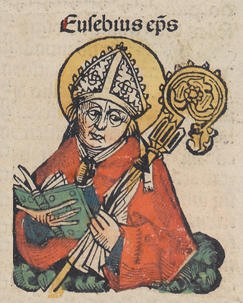
August 2--St. Eusebius of Vercelli, Bishop

File:Nuremberg chronicles f 128r 4..jpg*

Where is your home? Where do you really belong? Is our home in heaven or in the world? St. Eusebius of Vercelli answered that very question throughout his life. He was born in Sardinia at the beginning of the fourth century and became a priest in Rome. He went to Vercelli and was elected bishop by the people. In 354, the pope asked him to request the emperor call another council to settle the issue between Arians and Catholics. The Arians did not accept the Trinity as three Persons in one God even though the Council of Nicaea condemned Arianism in 325. The emperor favored Arianism as Pope Benedict XVI wrote: “For him it was not truth that counted but rather political opportunism: he wanted to exploit religion as the bond of unity for the Empire.” Thus, the emperor exiled Eusebius where he was subjected to persecution. Eusebius was eventually freed and returned to Vercelli where he died peacefully in 371. All the time he preached the truth of the Nicene Creed.

Benedict also wrote: “Just like the Apostles, for whom Jesus prayed at his Last Supper, the Pastors and faithful of the Church ‘are of the world’ (Jn 17: 11), but not ‘in the world’. Therefore, Pastors, Eusebius said, must urge the faithful not to consider the cities of the world as their permanent dwelling place but to seek the future city, the definitive heavenly Jerusalem. This ‘eschatological reserve’ enables Pastors and faithful to preserve the proper scale of values without ever submitting to the fashions of the moment and the unjust claims of the current political power.” Our home is heaven, but we must try to bring about the Kingdom of Heaven here: “Thy kingdom come, thy will be done on earth, as it is in heaven!”
*https://commons.wikimedia.org/wiki/File:Nuremberg_chronicles_f_128r_4..jpg

Monday, July 13, 2020

July 20—St. Apollinaris, Bishop and Martyr


*

If at first, you don’t succeed… well you know the rest. But what about attempting the conversion of others? What about facing continued rejection, intimidation, and even threats of persecution and death? Are we required to share our faith with others who hate us and hate what we believe? Are we called to bring Christ to them, or should we leave them be? Afterall, Jesus did say, “Whoever will not receive you or listen to your words—go outside that house or town and shake the dust from your feet” (Mt. 10:14) and “When they persecute you in one town, flee to another” (Mt. 10:23).

This may have been in the mind of today’s saint, Apollinaris. According to legend, he was sent by St. Peter to the city of Ravenna, Italy. With the working of miracles, he attracted attention and converts, but also enemies, who beat him and drove him out. He was found and hidden by Christians, but then captured, compelled to walk on coals and again expelled. He stayed in the area and preached, but later returned a third time to Ravenna. “Again he was captured, hacked with knives, had scalding water poured over his wounds, was beaten in the mouth with stones, … was flung into a horrible dungeon to starve to death;” but then put on a ship to Greece. After four years he returned to Ravenna a fourth time, staying hidden, but was discovered and, again, savagely beaten, after which he died.

What compelled him to keep returning when he knew what would happen to him? It may be, that as bishop he wanted to be with his flock. Whatever his reasons, he faced death for the sake of the Gospel. We may not be called to die for the faith, but we are called to witness.


Monday, June 15, 2020

June 22--St. Paulinus of Nola, Bishop

*

What is a friend? A companion; someone to be with and share time with. Aristotle said a friend is “a single soul in two bodies.” Holy friendship is beyond that. It is a companionship in Christ. Our saint today was a holy friend to many saints, Augustine, Ambrose, Martin of Tours, Jerome, and more.

St. Paulinus of Nola was a political man, becoming Governor of Campania in Italy in the fourth century at a young age, serving the people. However, he lost favor with the political authorities and learned the limits of earthly ambition. He went to learn from St. Ambrose and then went to his native land of Bordeaux and was baptized. He found a new friend in his wife Therasia of Barcelona, with whom he had a son. But after their son died a week after birth they saw that God had another path for them. They gave up all their possessions and moved back to Nola in Campania, where they lived as brother and sister in a community. He had been ordained in Barcelona and took up priestly duties in Nola, eventually being chosen as bishop.

He writes about holy friendship: “It is not surprising if, despite being far apart, we are present to each other and, without being acquainted, know each other, because we are members of one body, we have one head, we are steeped in one grace, we live on one loaf, we walk on one road and we dwell in the same house” (Ep. VI, 2). Jesus said to his disciples: “No one has greater love than this, to lay down one’s life for one’s friends. You are my friends if you do what I command you” (Jn. 15:13-14). Paulinus invites us to remember what true friendship is, life in Jesus Christ!

*https://commons.wikimedia.org/wiki/File:Linz_Dom_Fenster_09_img03.jpg

Sunday, January 5, 2020

January 13--St. Hilary of Poitiers, Bishop and Doctor of the Church

File:Saint-Hilaire-de-Poitiers Reliquienschrein.jpg*


Arianism is the heresy that teaches that Jesus cannot be God because there is only one God and if Jesus is God, then there are two gods. Arius got it partially right and completely wrong. There is only one God AND Jesus is God: “I believe in one Lord Jesus Christ, the Only Begotten Son of God, born of the Father before all ages. God from God, Light from Light, true God from true God, begotten, not made, consubstantial with the Father” as it says in the Nicene Creed adopted at the Council of Nicaea in 325.

So, what does this have to do with our saint? St. Hilary of Poitiers was born in 315, was baptized in 350, and was acclaimed bishop in 353. As bishop he held the truth of the Catholic Church against Arianism and was banished by the emperors, who supported Arianism. St. Hilary wrote a major treatise against Arianism in order to teach why Jesus is God as well as the Son of God. St. Hilary died in 368. Arianism was condemned again in 381 and finally defeated in the sixth century in France.

Heresies start out as logical conclusions based on specific choices, but without taking into context the whole of the faith. For example, Arianism was based on the oneness of God, which is true. However, it did not take into account the faith that Jesus is God. And for that, hundreds of thousands, if not millions, were lured away from the true faith. People today are also lured away from the faith by denials of the truths of God. They rely on their own choices and make up their own faith and call it Catholic. We must stand true to the faith of Jesus in the Church, even if it means banishment from our society.


*https://commons.wikimedia.org/wiki/File:Saint-Hilaire-de-Poitiers_Reliquienschrein.jpg

Sunday, November 3, 2019

November 12--St. Josaphat, Bishop and Martyr


*


In 1995, Pope St. John Paul II declared: “The Church must breathe with her two lungs!” (Ut Unum Sint, 54) What he meant was that the Church was only breathing with one lung, namely the Western Church. He declared that we needed the Eastern Church as well. The Catholic Church has been separated from her Eastern Orthodox sister churches since 1054. However, since then, there have been efforts at union. One prominent event toward union was the Union of Brest in 1596. Seven Orthodox bishops in Lithuania/Poland/Ukraine came into full communion with the pope, while still retaining their Eastern Rites.

Why is this important for our saint? He became an archbishop in one of these dioceses after 1596. St. Josaphat was born in 1580 to Ruthenian Orthodox Catholic parents. After the Union of Brest he became a monk in 1604 in the Ruthenian Rite. His zeal for his faith led him to write catechisms and apologetics, defenses of the Church. He defended the rights of the Eastern Rite Churches, but some opposed him on the grounds that he was trying to “go Latin” and not be faithful to the Eastern traditions.

In 1623, an Orthodox priest insulted St. Josaphat and tried to force his way into the archbishop’s residence. St. Josaphat had him removed, but he had assembled a mob, which then attacked St. Josaphat, shooting him and hitting him in the head with a battle axe, killing him. He was canonized in 1867 as a martyr.

The Eastern Orthodox and Roman Catholic Churches have the same sacraments, the same faith, and the same love of God. However, the difference between the two is the role of the pope. Pope St. John Paul II wrote about the need for unification. May the prayers of St. Josaphat bring us into communion with each other.

*https://commons.wikimedia.org/wiki/File:St_Josaphat_Zbarazh.jpg


Sunday, September 15, 2019

September 22--St. Thomas of Villanova, Bishop

File:Thomas von Villanova 17Jh.jpg*


“If you want God to hear your prayers, hear the voice of the poor. If you wish God to anticipate your wants, provide those of the indigent without waiting for them to ask you. Especially anticipate the needs of those who are ashamed to beg. To make them ask for alms is to make them buy it.”

Catholic social justice teaching emphasizes, as one of its major themes, the preferential option for the poor. Although we may think of Catholic social teaching as a modern development, it goes back to the Scriptures and the saints, such as today’s saint, St. Thomas of Villanova, who is quoted above.


St. Thomas was an Augustinian friar nominated Archbishop of Valencia, Spain in 1544. When he finally accepted the position under obedience, he donated the four thousand gold pieces given to him by the religious of the cathedral to furnish his residence to a local hospital in need of renovation. He wore the habit he received as a novice 28 years earlier. He mended it himself. He not only advocated direct action to serve the poor, he also worked at solving the structural foundations for poverty: “Charity is not just giving, rather removing the need of those who receive charity and liberating them from it when possible.” St. Thomas of Villanova died on September 8, 1555.

Jesus told us in the Parable of the Last Judgment, Mt. 25:31-46, to feed the hungry, clothe the naked, give drink to the thirsty, visit the sick and imprisoned, shelter the homeless, and bury the dead. The Corporal Works of Mercy are a distinguishing characteristic of a disciple of Jesus. But so is providing employment, education, advocacy, and justice. The Corporal Works of Mercy take care of immediate needs. We must also ameliorate the causes of poverty.


*https://commons.wikimedia.org/wiki/File:Thomas_von_Villanova_17Jh.jpg


Friday, July 12, 2019

July 30--St. Peter Chrysologus, Bishop and Doctor of the Church


Pope Francis has placed the mercy of God as key to understanding God’s love in our lives. This was also true of today’s saint, Peter Chrysologus, who lived from A.D. 406-450 and was bishop of Ravenna, Italy. St. Peter was appointed bishop of the emperor’s administrative center in Italy when he was 27-years-old, probably at the emperor’s request.

He earned the title, “Chrysologus”, which means “golden-worded” because of his effective preaching and practical sermons. He is even called the “Doctor of Homilies” because of his simple, yet theologically profound words. He once said, “Ordinary language is dear to simple souls and sweet to the learned.”

He also spoke about how mercy is one of the three things through which faith stands firm, along with prayer and fasting: “When mercy dries up, fasting suffers drought, for mercy is to fasting what rain is to the earth. The one who fasts may prepare his heart, cleanse his flesh, pull out his vices and sow virtues. But if he does not sprinkle his plants with streams of mercy, he does not gather his harvest. O faster, when your mercy fasts, your field fasts too.”

“Lord, let your mercy be on us, as we place our trust in you” (Ps. 33:22). This could be the motto of St. Peter Chrysologus, or even of Pope Francis. Jesus told us in the parable of the unforgiving servant: “Should you not have had pity on your fellow servant, as I had pity on you?” (Mt. 18:33). He told the Pharisees: “Go and learn what this means: ‘I desire mercy, not sacrifice.’” He is also telling that to us! Pope Francis called an Extraordinary Jubilee Year of Mercy for 2015-2016. That may be over, but the purpose of the Jubilee Year is not. We are all called to holiness and a supreme expression of holiness is mercy!

Sunday, October 7, 2018

October 17--St. Ignatius of Antioch, Bishop and Martyr


Imagine this: You are on your way to your execution, brutal at best and torturous at worst. But you write your friends to not try and stop it. Rather, you want to die as an example for others. This is what St. Ignatius of Antioch did when he was taken to the Circus Maximus in Rome. He was a second-generation Christian, having been taught by John the Apostle. As bishop of Antioch, he was a successor to Peter, who was bishop there before going to Rome. He was brought before the Emperor Trajan and refused to recant his faith, whereupon he was sentenced to death in the Circus, to be eaten by lions. In anticipation of the efforts of the Christians in Rome, he wrote: “The only thing I ask of you is to allow me to offer the libation of my blood to God. I am the wheat of the Lord; may I be ground by the teeth of the beasts to become the immaculate bread of Christ.” 

St. Ignatius wrote to various communities on his way to his martyrdom. He wrote about the importance of loyalty to the bishop. In this day we are seeing the bishops in a different light. Some have sinned grievously, while others have sinned in covering up grievous sins. Our bishops are successors to the apostles, but they are also men who need God’s grace in their own lives. We do need to be loyal to them, but we also need to help them in being accountable for the responsibilities they have. The laity has a co-responsibility, along with the clergy, to bring about the Kingdom of God. Let us never renege on our own baptismal promises to reject Satan and all his evil works! St. Ignatius, pray for us.